The Folklore of Ancient Standing Stones: A Cultural Explainer
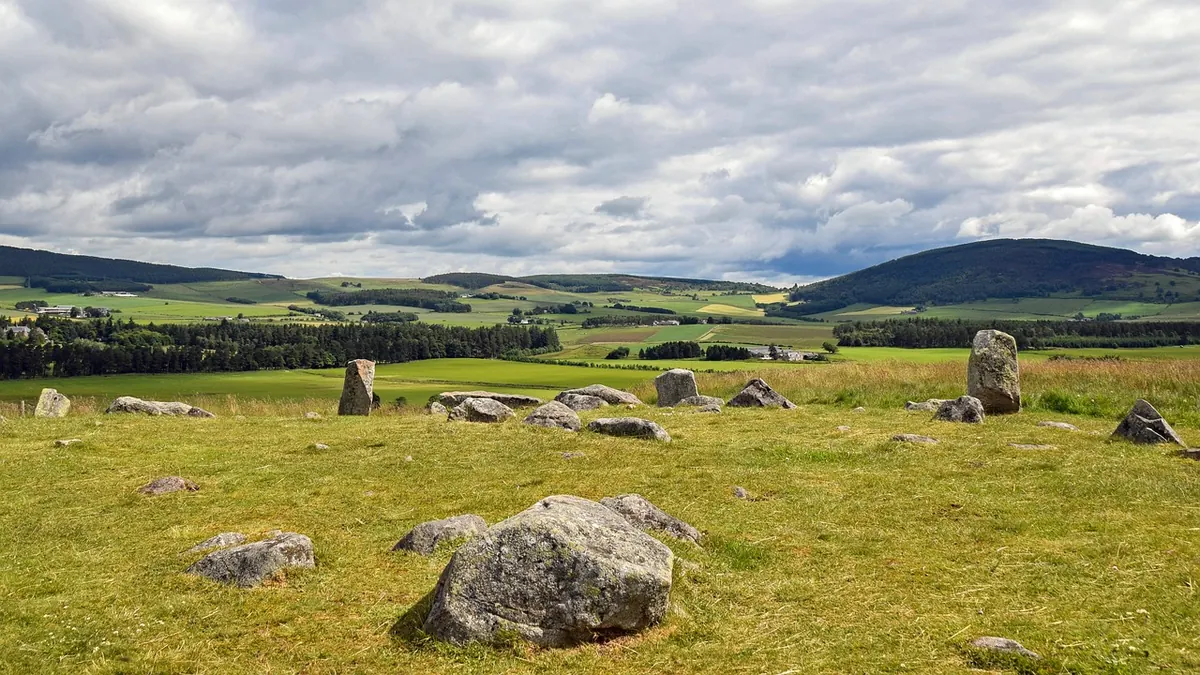
The stone is barely knee-high, grey and lichened, leaning in a hedge bank at the edge of a wheat field. It has stood there, or within a few feet of there, for four thousand years. And according to a story once told in the village pub, it walks down to the brook at midnight to drink. Both facts matter. A megalith is an archaeological monument and a piece of communal imagination, and the two have never been easy to separate.
People have told stories about these stones for as long as anyone has written them down, and probably much longer. The reasons are practical. A big stone in an open field is a landmark: it marks a boundary, a crossing, a parish line, a meeting place. It is also unexplained. Before radiocarbon dating, a farmer had no way of knowing who raised it, so the answer had to come from somewhere else — the devil, a witch, a giant, a punished congregation.
Then there is the Church. Medieval and later preachers had an interest in framing the old stones as heathen error or the devil's handiwork, which is why so many "Devil's" names survive on maps. The landscape does the rest: stones near springs, on ridge lines or beside old tracks gather different tales from stones hidden in woodland.
Across Britain the same handful of motifs turns up again and again, often within a few miles of each other. Start reading a county folklore collection and you will meet them quickly.
A king marching across England with his army is stopped by a witch — in some tellings Mother Shipton — who turns him to stone. The King Stone stands apart; the King's Men form the circle; the Whispering Knights, a separate group nearby, are the king's own men caught plotting against him. Local tradition also insists the stones cannot be counted the same way twice.
Nine women, punished for dancing on the Sabbath, stand in a ring on the moor, and the isolated King Stone a short way off is the fiddler who played for them. The tale is a nineteenth-century moral as much as a folk story, but it has stuck, and it has shaped how people behave on a moor that is itself a landscape of burial cairns and old quarry tracks.
Here the story is about a cow. A miraculous beast filled any vessel brought to it until a witch milked it into a sieve and drained it dry. The stones are sometimes described as a fold for sheep, sometimes as the witch's punishment. The circle sits on high moorland near the Stiperstones, and the story shifts with whoever tells it.
Folklore is easier to judge when you are standing on the site. Look for these things.
Archaeology and folklore are not competing explanations. They answer different questions. Archaeology can tell you that a circle was raised around 2500 BCE, that cremated bone was placed in a central pit, and that the stones were dragged from a source two miles away. Folklore tells you why a nineteenth-century farmer warned his children not to play near it, why a couple walked around it three times on Midsummer's Eve, and why the stone still feels like it belongs to someone.
When the two are set side by side, the monument becomes thicker. A radiocarbon date gives you a century; a story about a witch gives you a community's fear, humor, and sense of place. Neither is complete alone. The best writing on standing stones holds both in view, and lets the tension between them do the work.
If you go looking for the folklore on the ground, a few simple habits will keep the stones and the stories intact.
Standing stones are not just relics. They are ongoing places where memory, landscape, and imagination meet. The next time you pass a leaning stone in a hedge, remember: it may have been a boundary marker, a burial monument, a dancing floor, or a witch's punishment. It may be all of them at once. And if you come back at midnight, you might just catch it walking down to the brook.
Photo: kolibri5 / Pixabay
Previous Post
Comparing Three Historic Market Towns for a Photography Day Out
Next Post
Beginner's Guide to Night Photography at Historic Landmarks